Palm Springs Aerial Tramway: Complete Visitor Guide
The Palm Springs Aerial Tramway climbs 5,873 vertical feet in about ten minutes, from Chino Canyon on the desert floor to a pine forest most visitors did not know was up there. It is the single most-searched attraction in this valley, it is worth every bit of the attention, and the number of people who get it slightly wrong is remarkable.
Here's the guide we'd give a friend.
Tickets & Prices
Round trip fares: adults $36.95, seniors 65+ $33.95, children aged 3 to 10 $20.95. Under 3 is free but still requires a boarding pass.
Parking is separate: $15 per vehicle. Residents of Palm Springs, Cathedral City, Palm Desert, Rancho Mirage, Indian Wells, La Quinta, Indio, Coachella and several neighbouring communities park free with proof of residency, which is a genuinely generous local policy and worth knowing if you live here.
Ride and Dine is the combination ticket — tram plus dinner at Pines Café — available daily from 4pm, with dining from 4:30. It runs $41 for adults and seniors and $27.50 for children, which is roughly four dollars more than the tram alone. If you were going to eat anything at all up there, take it.
Buy online. The tramway does not generally require timed entry, but on holiday weekends and through the winter peak the queue at the Valley Station ticket window is the worst part of the day, and there is nothing to do while you stand in it.
The most common mistake is treating this as a one-hour errand. Between the drive up Tram Way, parking, ticketing, the queue for a car, the ride, and the same in reverse, you should budget three hours minimum for a trip where you barely leave the observation deck. Four to five is more realistic.
Weather at the Top (Mountain Station)
Mountain Station sits at 8,516 feet. Valley Station is at 2,643. That difference is the entire product.
Expect the top to be 30 to 40 degrees cooler than the desert floor, year-round. In practice:
- Summer. A brutal 110°F afternoon in Palm Springs is comfortable — often 70s — at the top. This is why the tram is the correct answer to "what do we do in August," and why locals treat it as an escape valve rather than a sightseeing trip.
- Winter. There is frequently snow on the ground at Mountain Station while it is 72°F and shirtsleeves in town. Snowshoes and cross-country skis are rentable at the Adventure Center in season. People arrive in shorts, look at the snow through the glass, and turn around.
- Any season. It is windier up there than down here, and the observation decks are exposed. Whatever you think the temperature will be, subtract for wind.
Bring a jacket. Bring a jacket even if you are certain you won't need it, because the desert floor gives you no intuition whatsoever for what 8,500 feet feels like.
The Ride Itself
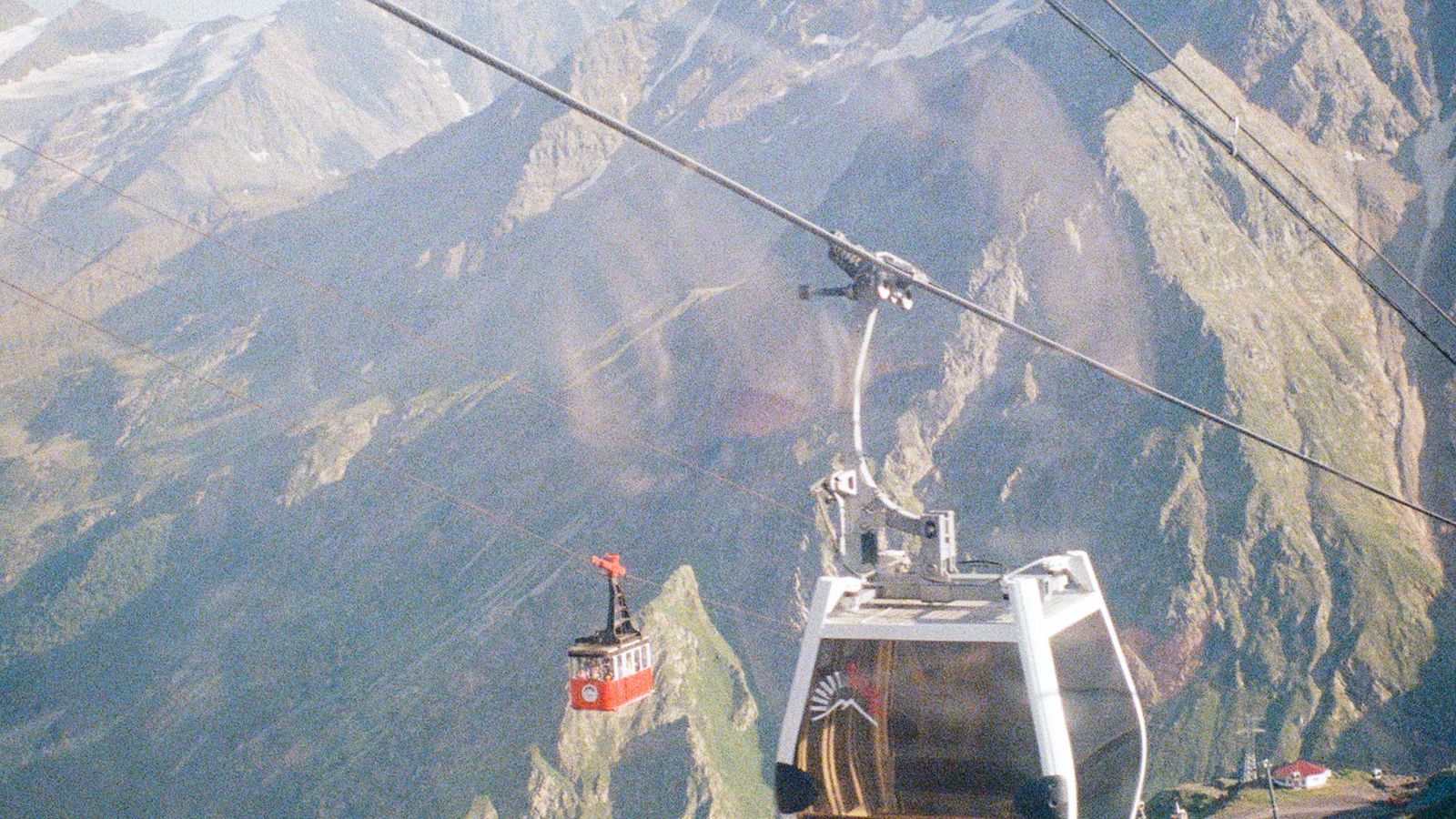
The cars are the world's largest rotating tramcars — they entered service in September 2000, replacing the original fixed-floor cars from 1963. Each car rotates slowly through two complete revolutions during the ascent, so you get the full 360 without elbowing anyone. It's a genuinely clever bit of engineering and it removes the only real annoyance of cable cars.
The construction story is the good bit of trivia: the tramway was built into Chino Canyon between 1961 and 1963 with no road access to most of the towers, so helicopters flew more than 23,000 missions over 26 months to erect four of the five support towers and the Mountain Station itself. It opened in September 1963.
Is the Tramway Safe?
It's a question people search, so here's a straight answer: the tramway has carried tens of millions of passengers since 1963 and has had one passenger fatality, in 1984, when a bolt from a shock absorber came through a tramcar window. There have been a handful of operational incidents over six decades — a car stuck for thirteen hours in 1963 on an electrical fault, a flash flood in 1985 that destroyed part of Tramway Road — and essentially nothing since.
By the standards of aerial tramways, or of any transport system running continuously for sixty-plus years, that is an unusually clean record. If heights make you nervous, the height is a reasonable thing to be nervous about. The engineering is not.
Restaurant at the Tramway
Three options at Mountain Station:
Peaks Restaurant is the sit-down one — full service, floor-to-ceiling valley views, and the only place up there where dinner is an occasion rather than refuelling. Reserve in season.
Pines Café is cafeteria-style: burgers, sandwiches, pasta, salad. It's the Ride and Dine venue and it's fine. Nobody comes up the mountain for the food.
Lookout Lounge does drinks. A cocktail at 8,500 feet while the valley lights come on is the correct final act of a day here, and it costs less than most people expect.
Best Time to Go
Time of day: late afternoon. Ride up two to three hours before sunset, take the Desert View Trail while the light is good, eat, and come down in the dark with the whole valley lit up beneath you. The last car up is 8pm and the last car down is 9:30pm, which gives you plenty of room.
Day of week: weekdays if at all possible. The first car up runs at 10am Monday to Friday and 8am on weekends and holidays — that earlier weekend start exists precisely because weekends are heaving.
Season: the tramway is good every month of the year, which almost nothing else here can claim. Summer for the heat relief. Winter for snow. Spring for wildflowers in Long Valley. Autumn for the clearest air.
Hikers: Mount San Jacinto State Park begins where the tram lets you out, and a free self-issue wilderness permit is available at the Long Valley Ranger Station just below Mountain Station. The Round Valley Loop is the classic — around 4.5 miles at altitude, through pines and boulder meadows. The Desert View Trail is 1.5 miles, paved in part, and manageable in ordinary shoes. San Jacinto Peak is 11 miles round trip and a full committed day.
Hotels Near the Tramway
Nothing sits at the tramway — the Valley Station is up its own canyon road, about ten minutes north-west of downtown, with no lodging on it.
The genuinely close options are the North Palm Canyon and Uptown properties, which put you five to eight minutes from the turn onto Tram Way. Downtown hotels add maybe five minutes. Anything in south Palm Springs — the Ace, the Saguaro, the Parker — adds fifteen to twenty, which matters only if you're trying to make the 8am weekend car.
Honestly, in a city this small, proximity to the tramway is not a reason to pick a hotel. Pick the hotel you want and drive the extra ten minutes.
What to Bring
- A jacket. Non-negotiable, all four seasons.
- Proper shoes if you intend to walk anything beyond the observation decks. The trails are real trails with roots and rocks.
- Water. 8,500 feet is dry and thin and dehydrates people faster than they notice.
- A card for parking, and patience for the road up, which is steep and switchbacked and not the place to be in a hurry.
Good to know
A round-trip adult ticket is $36.95. Seniors 65 and over are $33.95 and children aged 3 to 10 are $20.95, with under-3s free but still needing a boarding pass. Parking is a separate $15 per vehicle, though residents of Palm Springs and most other Coachella Valley cities park free with proof of address.
Keep exploring
Get The Desert Weekender
A weekly email with new guides, events, and hidden gems. No spam, just sun.